Hedges do a lot of work in a Devon garden. They screen neighbours, shelter the border from the wind and give birds somewhere to nest. Pick the right plant and a hedge will look after itself for decades with one or two cuts a year; pick the wrong one and you will spend every autumn wrestling growth that is too fast, too leggy or too open at the base. Here is what to plant across Devon, and how to get the best out of each type.
What Makes a Good Devon Hedge?
Devon gardens have a real advantage when it comes to hedging. The mild, damp climate suits a wide range of plants, and the growing season runs longer than in most of the country, which means hedges here need cutting more often than the same species would further east. There are constraints too: coastal gardens from Braunton to Ilfracombe take salt-laden wind, exposed plots on Exmoor and Dartmoor need tough, dense planting, and wet ground is common in winter. The rule is simple: pick a hedge that suits the site first, and the look second.
Beech: The Classic Formal Hedge
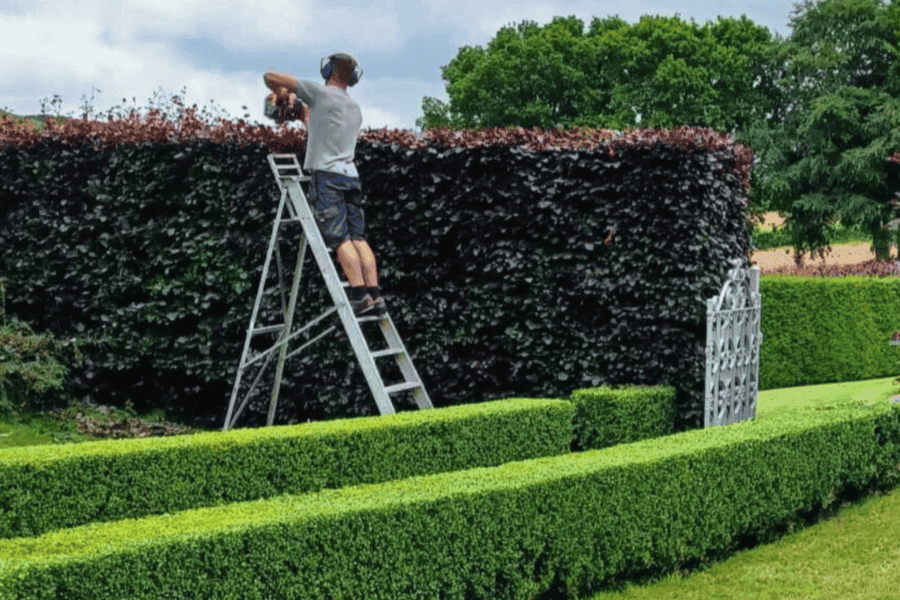
Beech is the hedge most people picture when they think of a smart garden boundary. It clips into a crisp, formal shape, holds its copper-brown leaves through winter, and grows steadily rather than frantically, which makes it one of the best all-round hedges for Devon properties. It copes fine with the acid clay common across North Devon. Cut it once in late summer, usually August, and it will hold its shape through the colder months; the RHS recommends a single late-summer trim each year.
If you want the classic look without years of patience, a well-grown beech hedge from an established nursery settles quickly. For advice on planting, including the right size of plant for your boundary, our Devon hedge planting team can talk you through the options.
Hawthorn: The Native Workhorse
Hawthorn, also called quickthorn, is the backbone of the Devon countryside: tough, thorny and dense, which makes it an excellent stock-proof boundary on farmland and a wildlife-friendly choice for gardens that back onto fields or lanes. It flowers white in May and carries red haws through autumn that birds rely on. It grows fast and responds well to hard cutting, but on a garden scale it needs cutting twice a year, once in summer and again in autumn, to keep it thick at the base. Left alone it quickly becomes leggy; a hard renovation cut in late winter will usually bring it back.
Leylandii: Fast Privacy With a Catch
Leylandii is the fastest way to screen a garden, and in the mild Devon climate it can put on well over a metre of growth a year. That is exactly the problem: left to itself it becomes a tall, top-heavy wall that blocks light, drains the soil and causes neighbour disputes. It only ever looks good with regular, disciplined cutting, and the RHS advises cutting it two to three times through the growing season. It also will not regrow from old wood; cut into the brown and the bare patches stay bare, so trim little and often rather than hard and rarely.
If your leylandii has already run out of control, our hedge trimming service can bring it back to a height and width you can maintain.
Yew: Slow, Dense and Long Lived
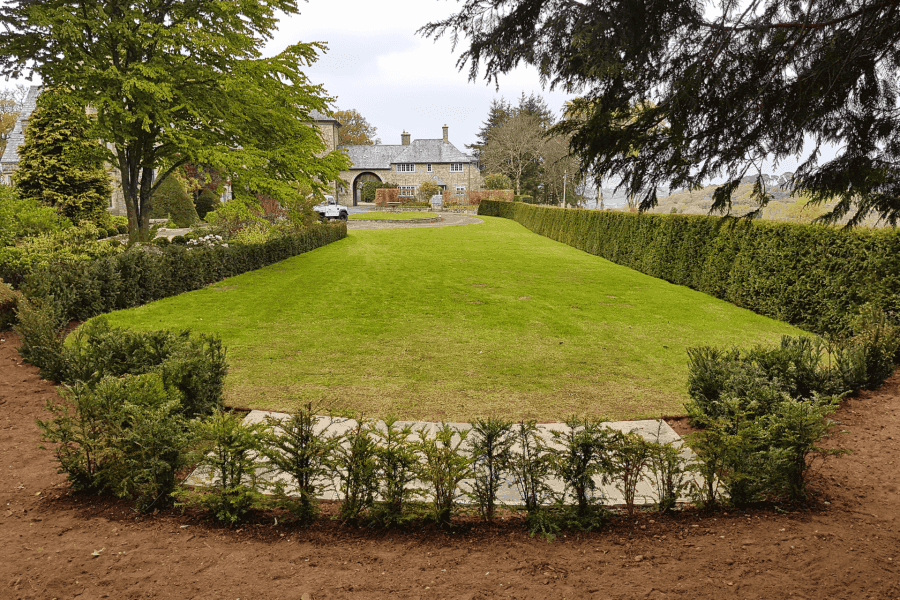
Yew is the opposite of leylandii in every way. It grows slowly, clips beautifully and can live for centuries, which is why it surrounds so many churchyards and formal gardens; for a boundary that needs to stay smart with modest effort, a yew hedge is hard to beat. The patience is the price, because yew takes several years to fill out and needs two cuts a year in summer and autumn once established. An overgrown yew hedge can usually be restored with a hard prune in late winter.
Native Mixed Hedgerows and Devon Banks
Traditional Devon hedgerows are a mix of species, often hawthorn, blackthorn, hazel, field maple and holly planted on a stone-faced earth bank. They are the defining feature of the Devon landscape and support far more wildlife than any single-species hedge, with blossom in spring, berries in autumn and nesting cover through summer. They need different care from garden hedges: cutting is done on a rotation, usually every two to three years, and the timing is bound by law as much as by good practice. Native hedgerows in the countryside may be protected under the Hedgerow Regulations 1997, and nesting-season cutting is restricted by the Wildlife and Countryside Act 1981, so check both before significant work.
The countryside hedgerow guidance on gov.uk explains when the rules apply. For day to day trimming of an established mixed hedge, our Devon hedge services cover everything from a single cut to a full renovation.

Trimming and Maintenance by Type
Timing is the difference between a hedge that looks tidy and one that fights you all year. The list below follows RHS recommendations for each type.
- Beech: one cut in late summer (August).
- Hawthorn: two cuts, once in summer and again in autumn.
- Leylandii: two to three cuts through the growing season, never into old wood.
- Yew: two cuts a year, in summer and autumn; hard renovation cuts in late winter.
- Mixed native hedgerows: trim on a two to three year rotation, outside nesting season.
For species-specific detail, the RHS guide to pruning hedges is the best reference, alongside its overview of choosing the right hedge.
When to Trim Hedges in Devon
The main hedge cutting window runs from late summer through to early spring, outside the bird nesting season. In Devon, growth often continues into October in a mild year, so a late-summer cut followed by a light autumn tidy keeps formal hedges sharp. Avoid hard cutting between March and August, when birds are nesting and the law protects active nests. If you are unsure whether your hedgerow has protected status, check before you book the work in.
Choosing the Right Hedge for Your Garden
If you want a low-maintenance boundary, choose a slow grower such as beech or yew and accept that it needs a few years to fill out. If you need privacy fast and can commit to regular cutting, leylandii works, but it is a long-term job. If wildlife is the priority, a mixed native hedge offers the best value for the garden and for the birds. Whatever you plant, the ground prep matters as much as the plant: good soil, enough spacing and a weed-free strip for the first couple of years are what turn bare-root whips into a proper hedge.
Getting Help From a Devon Hedge Professional
Evergreen Landscaping and Tree Services is a family-run Devon business covering Barnstaple, Braunton, Bideford, Ilfracombe, South Molton, Exmoor, Dartmoor and Exeter. We plant new hedges, trim and shape established ones, reduce overgrown boundaries and renovate tired native hedgerows, always working around the nesting season and the rules that protect rural hedging. If you would like a hedge planted, or an overgrown one brought back under control, we offer a free, no-obligation quote.
Get in touch through our contact page and we will look at your hedge and recommend the right approach.
Frequently Asked Questions
Q: What is the fastest growing hedge in Devon?
A: Leylandii is the fastest growing hedge you can plant, adding well over a metre of growth a year in the mild Devon climate. It gives quick privacy but needs cutting two to three times a year, and it will not regrow from old wood once cut back hard.
Q: Which hedge is best for privacy in Devon?
A: For year-round screening, beech is an excellent choice because it holds its brown leaves through winter. Leylandii gives the quickest cover if you are happy to maintain it regularly, while yew makes a dense, long-lived hedge if you can wait a few years.
Q: When should I trim my hedge in Devon?
A: Most hedges are trimmed from late summer through to early spring, outside the bird nesting season. Beech gets one cut in late summer, hawthorn and yew get two cuts a year, and leylandii needs two to three cuts through the growing season.
Q: Do I need permission to remove a hedgerow in Devon?
A: Rural hedgerows may be protected under the Hedgerow Regulations 1997, and cutting during the nesting season is restricted under the Wildlife and Countryside Act 1981. If your hedgerow is on agricultural land, check with the local planning authority before removing or heavily cutting it.
Q: Will a hard cut kill a hedge?
A: It depends on the species. Beech, hawthorn and yew regrow well from hard renovation cuts, but conifers such as leylandii will not regrow from old wood. Check what you are cutting before taking a hedge back hard.