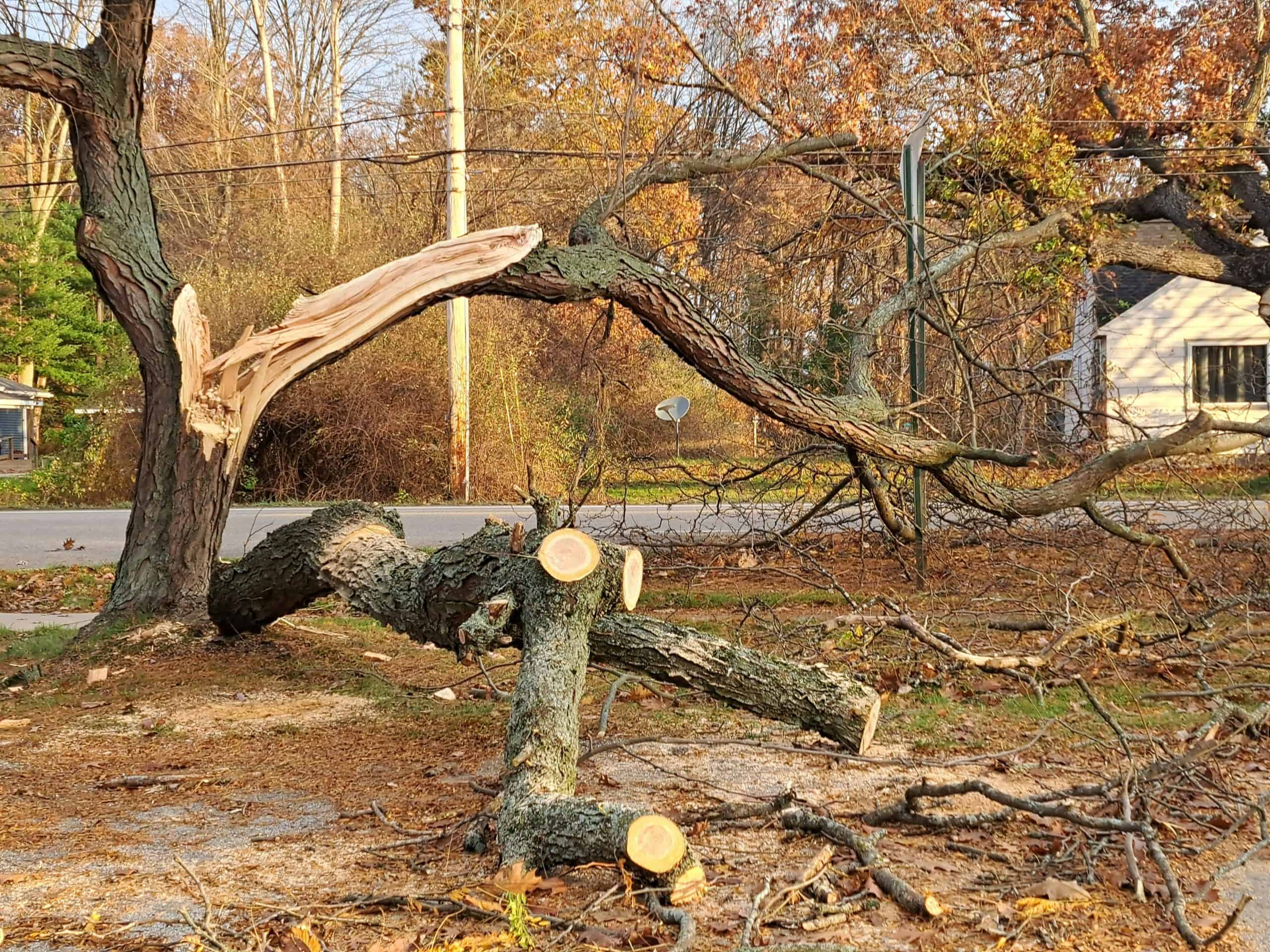
A tree coming down is one of the most alarming things that can happen on your property. One minute the garden looks normal, the next there is a huge trunk across the lawn, a branch through a fence, or the driveway blocked entirely. In North Devon, where Atlantic storms arrive with little notice, it happens far more often than people expect.
How you react in the first hour matters. Most of the danger after a tree falls comes not from the tree itself but from what people do next: walking underneath it, trying to cut it, or moving it without checking what it is resting on. This guide takes you through the safe sequence, step by step, so you can protect your family and your property and get the mess sorted properly.
The First Five Minutes: What to Do Straight Away
Keep everyone away from the tree first. Trees that have just fallen are unstable, and a trunk that looks settled can shift, roll or spring back as weight moves. Set a mental boundary around the whole tree and keep children, pets and curious neighbours on the far side of it.
Move cars and anything valuable out of the area if you can do so without walking under the tree. A vehicle parked within reach of a leaning trunk or hanging branch is not worth the risk of standing underneath it to move it.
Take photographs from a safe distance before anything is touched or moved. Insurers ask for evidence of the original scene, and a clear picture of where the tree landed and what it hit can make a claim much smoother later on.
If anyone is injured, or the tree is touching the building in a way that makes it unsafe to stay inside, call 999 first. Emergency services deal with fallen trees regularly and will tell you exactly what to do while help is on the way.
Check for Danger: Power Lines, Gas and the Building
The single most dangerous situation is a tree touching an overhead power line. Treat any line as live, keep everyone well back, and call 105, the national electricity emergency number, before you do anything else. The same applies if the tree has pulled down a service cable onto the ground: the area around it can be live and dangerous.
If the tree has struck the house, check whether the structure looks sound from a distance. Cracked walls, a shifted roof line or windows forced out of shape all mean the building should be checked before anyone goes back inside or under the affected section.
If you can smell gas, or the tree has hit a meter box or pipework, call the gas emergency number on 0800 111 999 and move everyone away. Do not use switches, phones or torches near a suspected gas leak.
When to Call in the Professionals
Most fallen trees are beyond what a homeowner should handle with a chainsaw. Anything larger than a branch you can lift comfortably at ground level, anything under tension, and anything leaning against a building or another tree is a job for a trained, insured team. For emergency tree removal in North Devon, Evergreen responds fast across Barnstaple, Bideford, Ilfracombe, Braunton and South Molton, and out to Exmoor and Dartmoor.
A professional team arrives with the right equipment, experience of working under pressure, and insurance that protects you if anything goes wrong. They will also spot dangers that are easy to miss, such as a tree hung up in the canopy above, a split trunk ready to give way, or damage to underground services. Years of tree surgery experience mean the team can dismantle a compromised tree without putting more of your property at risk.
What a Professional Emergency Tree Removal Involves
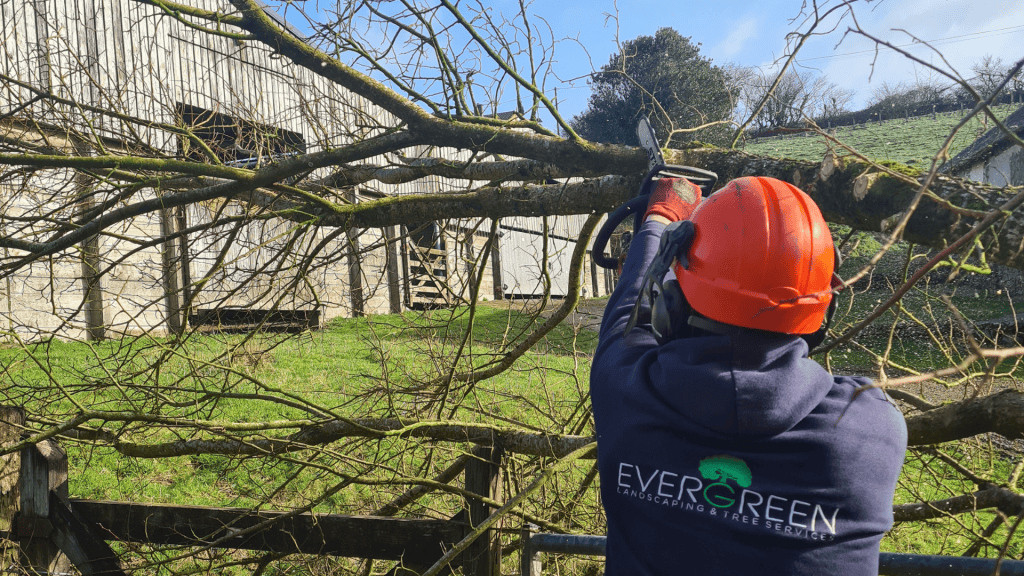
A proper emergency removal starts with a site assessment. The team looks at how the tree is resting, what it is touching, whether it is under tension, and the safest way to dismantle it. Then they make the scene safe first, usually by removing the weight from anything it is resting on, before cutting the trunk and branches into removable sections.
For larger trees the work is often done from a climbing position or a mobile platform, with the tree taken down piece by piece so that nothing drops uncontrolled. Once the main timber is cleared, the waste is chipped or removed, and the site is left tidy. If the tree has taken out fencing or damaged structures, a good team will advise on the next steps and, where the work falls within their services, can carry out the fence repairs at the same time. If you want the stump gone completely, stump removal and grinding can be arranged as part of the same visit.
Tree work is one of the most dangerous jobs in the UK, and the Health and Safety Executive guidance on tree work sets out why training, planning and the right equipment are non-negotiable. That is why professional removal should always be the first choice when a tree is big enough to be dangerous.
What Not to Do With a Fallen Tree
Never cut a tree that is bent, sprung or leaning under tension. The trunk and branches store huge amounts of energy, and cutting in the wrong place can make them whip, roll or kick back with enough force to cause serious injury.
Do not use a chainsaw unless you are trained to. Chainsaw injuries are among the most common and most severe in garden and land work, and a fallen tree on uneven ground is one of the hardest situations to cut safely.
Never climb the tree or stand underneath a hung-up branch. Never pull branches or trunks with a car, van or tractor: the strap or the tree can fail without warning and the results are unpredictable. And never, under any circumstances, touch a tree that is in contact with a power line.
Insurance, Responsibility and the Basics of the Law
Most home insurance policies cover storm damage, including the cost of removing a fallen tree that has damaged your home or outbuildings. Policies vary on garden-only clearance and on limits for tree work, which is why the first phone call after the photos should be to your insurer. Ask what is covered, whether they need to appoint the contractor, and keep receipts for anything you pay for yourself.
When a neighbour’s tree falls onto your land, the general pattern is that your own insurer deals with removing it from your property, and any claim against the neighbour’s policy depends on whether they knew the tree was unsafe and failed to act. Photograph everything before the tree is moved and let the insurers talk to each other rather than agreeing costs directly with the neighbour.
One more legal point worth knowing: removing a tree that poses an immediate danger is normally exempt from the Forestry Commission’s felling licence requirements. If you plan any wider felling, or the tree is protected by a Tree Preservation Order, check the Forestry Commission felling licence guidance and speak to your local planning authority before work starts. Our tree surveys, planned tree removal and pruning across the region are always carried out with the right permissions in place.
Frequently Asked Questions
Q: Does home insurance cover a fallen tree on my property?
A: Most buildings policies cover storm damage, including the cost of removing a fallen tree that has damaged your home or outbuildings. Policies vary on garden-only clearance, so call your insurer early, send them your photographs and ask what is covered before any work starts.
Q: Who is responsible when a neighbour’s tree falls on my land?
A: In most cases your own insurer deals with removing the tree from your property, and any claim against the neighbour’s policy depends on whether they knew the tree was unsafe. Photograph the scene before the tree is moved and let the insurers sort out liability between themselves.
Q: Should I cut up a fallen tree myself?
A: Only cut branches you can handle safely at ground level with hand tools. Anything under tension, hung up in another tree, or large enough to need a chainsaw is a job for a trained professional. Emergency tree work is dangerous even for experienced people.
Q: Do I need permission to remove a fallen tree?
A: Removing an immediate danger is normally exempt from felling licence requirements. If you plan any wider felling, or the tree is protected by a Tree Preservation Order, check with your local planning authority before work starts.
Q: How quickly can Evergreen respond to a fallen tree in North Devon?
A: As a Barnstaple-based team covering all of North Devon, we treat fallen trees and storm damage as priority jobs. Call us on 01271 346190 or 07919 838336 and we will talk you through what to do while we get to you.
Need Emergency Tree Removal in North Devon? Call Evergreen
Evergreen is a family-run landscaping and tree care business based in Barnstaple, with tree care services covering everything from routine pruning and health checks to full emergency response. We help homeowners and businesses across North Devon, Exmoor and Dartmoor, and when a tree comes down on your land we make it safe, clear the site and leave it tidy.
Call us on 01271 346190 or 07919 838336, or email evergreen-services@live.co.uk. If a tree has come down on your land, we will talk you through the first steps over the phone and get to you as quickly as we can. For anything less urgent, request a free, no-obligation quote online and we will come back to you promptly.